
The Cortisol-Lowering Evening Routine You Actually Need
A gentle, science-backed evening routine to lower cortisol naturally — soft rituals, calming supplements, and small shifts for overstimulated days.
SLEEP ROUTINE
7/14/20267 min read


The Cortisol-Lowering Evening Routine (A Gentle Reset for Overstimulated Days)
This post contains affiliate links, which means I may earn a small commission if you purchase through them — at no extra cost to you. I only recommend things I'd genuinely keep on my own nightstand.
It's 9pm and you're finally sitting down for the first time all day — and instead of feeling relieved, you feel... buzzy. Wired but exhausted. Your body is tired, but your mind is still running laps, replaying conversations, drafting tomorrow's to-do list, reaching for your phone without deciding to.
If that's you, nothing is wrong with you. Your body has simply been in go-mode for too long, and it never got the signal that it's safe to come down.
Cortisol — your body's main stress hormone — is supposed to fall naturally in the evening. It rises in the morning to help you wake, and it's designed to taper off as the light fades so melatonin can take over. But modern evenings are full of the exact things that keep it elevated: bright overhead lights, notifications, one more email, one more episode. This routine isn't about adding more to your day. It's about gently removing the things that keep your body braced — and letting it do what it already knows how to do.
What High Evening Cortisol Actually Feels Like
You don't need a lab test to recognize the pattern (though only a doctor can tell you what's actually happening hormonally — this is soft lifestyle support, not medical advice). It often looks like a strange "second wind" at 10pm, right when you should be winding down. Sugar or salt cravings after dinner that don't feel like hunger. Waking at 3am with your mind already mid-thought. Feeling tense in your jaw or shoulders for no reason you can name. A restlessness that makes true rest feel just out of reach, even when you finally have the time for it.
If several of those feel familiar, you're in the right place — and you're in very good company.
Not sure whether this is your pattern or just a rough week? My free 3-Day Burnout Quick-Check is a gentle printable that helps you notice what your body has been trying to tell you.
The Routine: 90 Minutes, Three Soft Phases
A quick permission slip before we begin: this is not a checklist to perform perfectly. It's a downshift. Some nights you'll do all of it, some nights you'll do one thing. Both count. The goal is simply to give your nervous system a series of small, repeated signals that say: the day is over now. You can put it down.
Phase 1 — The Transition (around 7:30pm): Signal That the Day Is Over
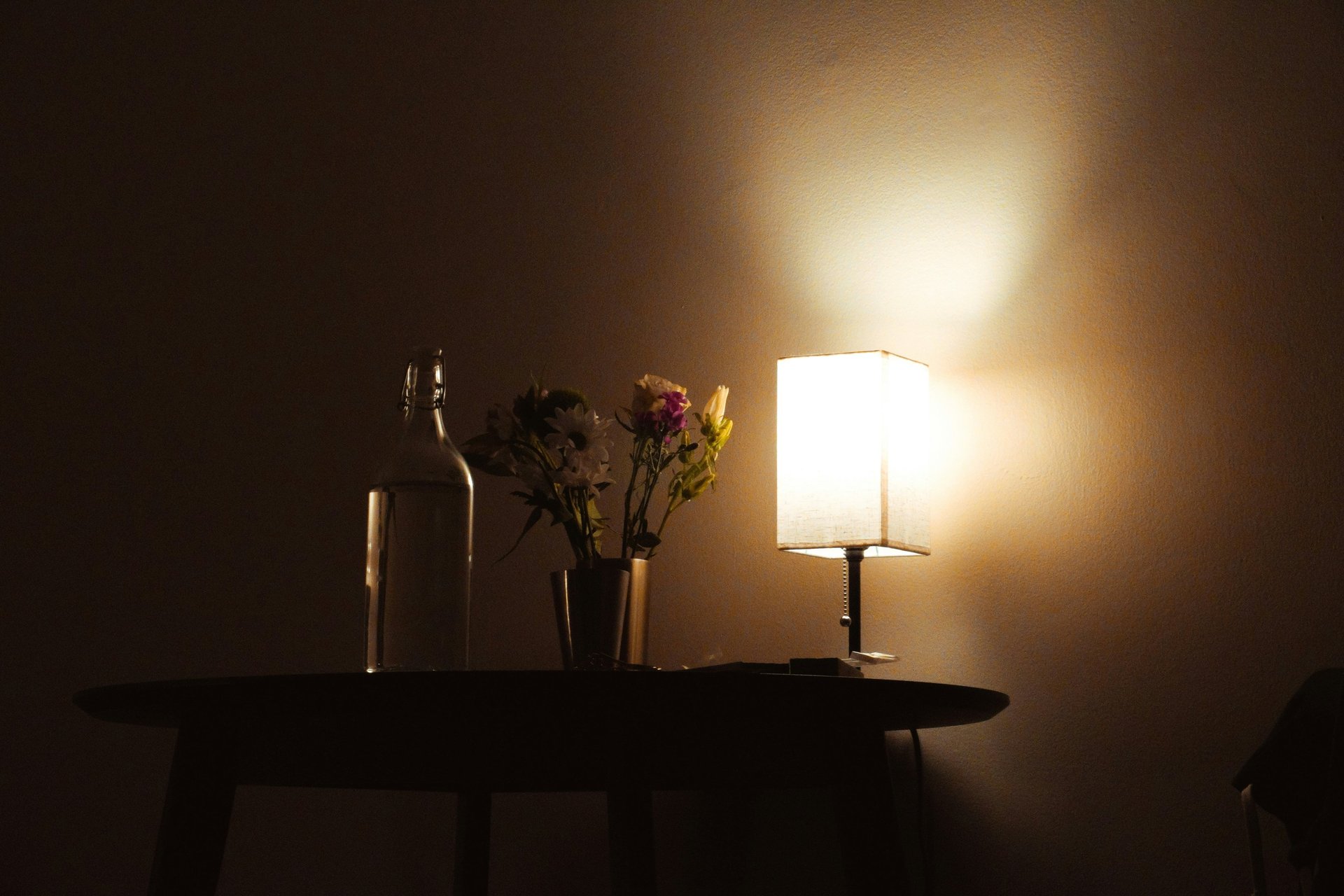
Your body reads light before it reads anything else. Bright overhead lighting tells your brain it's still midday — so the single most powerful thing you can do is dim the room. Switch off the ceiling lights and turn on a lamp or two. Warm, low, amber light. A Himalayan salt lamp or a simple dimmable bedside lamp makes this effortless, and candlelight works beautifully too — there's a reason a lit candle instantly makes a room feel like evening.
Then, change your clothes. It sounds almost too small to matter, but slipping into something soft is a physical boundary between the day-version of you and the evening-version of you.
Last, and hardest: put your phone somewhere that isn't your hand. Another room, a high shelf, a drawer — anywhere that requires standing up to retrieve it. You're not banning it forever. You're just not letting it follow you into the soft part of the night.
If your body feels particularly braced — shoulders up around your ears, that hummy tension under the skin — ten minutes lying on an acupressure mat can help release what the day left behind. The first two minutes feel strange; by minute five, something lets go.
Phase 2 — The Nourish (around 8:00pm): Calm From the Inside
This is the ritual part, and rituals matter more than we give them credit for. The kettle, the mug, the waiting — the sequence itself tells your body what's coming.
Herbal tea is the anchor here. Lemon balm tea is my quiet favorite — it's been used for centuries for exactly this restless, wired-tired feeling, and it tastes like a soft green exhale. Tulsi (holy basil) and classic chamomile are lovely too. Choose one and make it yours — same mug, same chair, most nights. The repetition is the medicine as much as the herbs are. (And yes, the beautiful mug genuinely helps. Rituals deserve nice objects.)
If you want gentle support beyond tea, two supplements come up again and again in the calm-evening conversation. Magnesium glycinate is the unhurried evening standby — it's the form of magnesium best known for being easy on the stomach and quietly settling, and many women take it about an hour before bed. Ashwagandha is the one people reach for when daytime stress keeps spilling into the night; it's an adaptogen with a long history in Ayurvedic tradition, and gummies make it an easy habit to keep.
One honest note, because you deserve honesty more than you deserve a sales pitch: supplements support a routine — they don't replace one. And please check with your doctor before adding anything new, especially if you're pregnant, nursing, or taking medication. The lamp, the tea, and the phone-in-the-other-room will always be the foundation. The rest is a gentle bonus.
Phase 3 — The Release (around 8:45pm): Empty the Mind, Settle the Body
Racing thoughts don't respond well to being told to stop. They respond much better to being given somewhere to go.
So: a brain dump. Two minutes, completely unstructured, in a journal that lives on your nightstand. Not gratitude lists, not prompts, no rules — just pour out whatever is circling. Tomorrow's tasks, the thing you wish you'd said, the worry with no shape. Once it's on paper, your mind no longer has to hold it through the night. That's the entire practice.
Then, breath. One pattern, nothing complicated: in through your nose for four counts, out slowly for eight. The long exhale is the important part — it's one of the simplest ways to nudge your nervous system out of alert-mode and into rest-mode. Five rounds. You'll feel your shoulders drop somewhere around round three.
Finish with your body low and still. Legs up the wall for a few minutes, a slow stretch on the floor, or simply lying down under something heavy — a weighted blanket gives that deep, even pressure that feels like the day finally setting itself down.
From here, you're already halfway into sleep's front porch. If you want to carry the softness the rest of the way, my nighttime sleep essentials post picks up exactly where this routine ends.
What to Skip (Gently)
Just as important as what you add is what you quietly leave out. This routine has no cold plunges, no 12-step protocol, no tracker to score you. If the wellness internet has left you feeling like calming down is another job to fail at — this is your permission to opt out of that entirely.
In the evening specifically, a few things tend to keep cortisol propped up long past its bedtime: intense late workouts (move hard earlier in the day if you can; keep evenings for slow stretching or a gentle walk), doomscrolling in bed, and "productive" content — the business podcasts and self-improvement videos that feel like rest but keep your brain in striving mode. You don't need to optimize your evening. You need to end it.
Making It Stick: Track the Pattern, Not Perfection
Here's the quiet truth about cortisol: no single evening changes much. Two to four weeks of mostly soft evenings changes a lot. The shift shows up as patterns — sleeping through the 3am hour more often, the second wind arriving less, your shoulders spending less of the day up around your ears.
That's why noticing matters more than perfecting. If you'd like soft structure for it, my Burnout & Cortisol Tracker is the gentle, printable version of this whole philosophy — a place to notice your energy, sleep, and stress patterns over time without turning your body into a project. And if you're not ready for that, the free 3-Day Burnout Quick-Check is a lovely place to simply begin paying attention.
Your body has been asking to come down all day. Tonight, let it.
FAQ
How long does it take to lower cortisol naturally? Cortisol falls within hours each evening when given the right cues — dim light, calm, and no new stressors. But shifting your overall pattern typically takes two to four weeks of consistent evening habits. Think season, not switch.
What is a "cortisol detox"? "Cortisol detox" is a popular term, not a medical one — your body doesn't need cortisol removed (it's essential), it needs help returning to its natural rhythm. In practice, a cortisol detox simply means a stretch of intentionally low-stress habits: earlier wind-downs, softer light, gentler evenings. This routine is essentially that, without the dramatic name.
What supplements help lower cortisol? Magnesium glycinate and ashwagandha are the two most commonly used for evening calm, alongside gentle herbal teas like lemon balm and chamomile. They work best as a supplement to — never a substitute for — light, rest, and boundaries, and it's always wise to check with your doctor first.
You might also love: 5 Nighttime Sleep Essentials · 3-Day Burnout Quick-Check (free) · Burnout & Cortisol Tracker




Connect
Stay in touch for fresh lifestyle tips
Links
unlock@bylifestyleunlocked.com
© 2025. All rights reserved.