
How to Create a Calming Living Room That Helps You Actually Unwind
Create a calming, cozy living room without a renovation. From warm lighting to layered textures, discover the budget-friendly Amazon finds that turn your living room into a space where you can truly unwind.
HOME DECOR
7/20/20268 min read
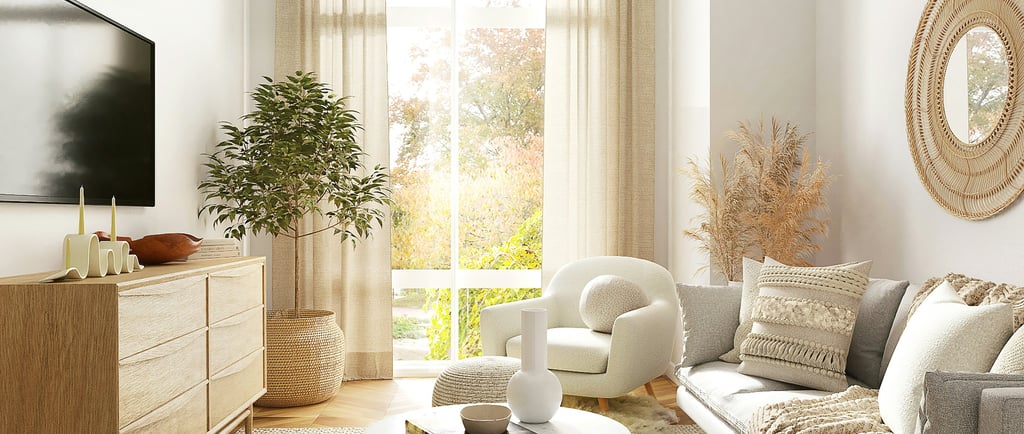
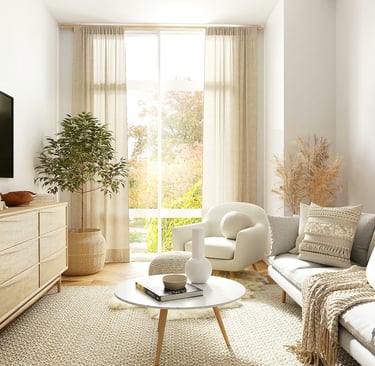
Why Your Living Room Might Be Keeping You Wired
Here's a question I don't think we ask ourselves enough: when you finally sit down on your sofa at the end of the day, does your body actually relax — or do you just switch from work-stressed to home-stressed with a remote in your hand?
For a lot of us, the living room has quietly become the most overstimulating room in the house. It's where the TV lives, where the clutter collects, where the overhead light glares down while we scroll on our phones under it. We call it the "living" room, but somewhere along the way it stopped being a place where we actually feel alive — or calm, or rested, or any of the things we desperately need at 8pm on a Tuesday.
And here's the thing your brain already knows even if you've never put words to it: your environment is not neutral. The lighting, the textures, the visual noise, the colors around you — all of it is information your nervous system is constantly processing. A harsh, cluttered, cold-toned room keeps your system subtly on alert. A warm, layered, intentional one gives it permission to power down.
The good news? Just like with your bedroom (if you missed it, I covered how to turn your bedroom into a cozy retreat without renovating), transforming your living room into a genuinely calming space doesn't require a renovation, a new sofa, or a designer. It requires a handful of intentional pieces working together — most of which you can order today and have at your door this week. Let's build your unwind-friendly living room.
What Makes a Living Room Actually Feel Calming
Before the product list, let's get clear on the why — because once you understand the principles, every decision gets easier (and cheaper, because you stop buying things that don't serve the goal).
A calming living room comes down to four things:
Low, warm light. Overhead lighting is the single biggest calm-killer in most living rooms. Bright, cool-toned light from above signals "daytime, be alert" to your brain. Calm happens at lamp height and below — warm pools of amber light at different levels around the room. This is the same principle behind a good evening wind-down routine: dim, warm light in the evening is one of the most direct signals you can send your body that it's safe to relax.
Softness everywhere your body lands. Your living room is where you physically rest, which means texture matters even more here than in other rooms. Throws, cushions, rugs, upholstered surfaces — every soft layer is an invitation to settle in.
Visual quiet. Clutter is unprocessed information. Every pile of mail, tangle of cables, and random object on the coffee table is something your brain has to keep tabs on. Calming rooms have breathing room — surfaces that are styled, not stacked.
Natural elements. Wood, plants, woven fibers, stone, linen. Humans are wired to relax around natural materials and living things — it's called biophilic design, and it's one of the most researched principles in interior wellness. You don't need a jungle; even two or three natural elements shift the entire feel of a room.
Keep those four in mind, and here's exactly how to build them into your space.
The Must-Have List: Calming Living Room Finds on Amazon
Organized by impact — the first few pieces do the heaviest lifting, the later ones are the details that pull it all together.
1. A Warm-Toned Floor Lamp (Your Overhead Light's Replacement)
Why it matters: If you change only one thing in your living room, make it this. A floor lamp with a warm bulb (2700K, always) placed in a corner or beside the sofa creates that soft, enclosed pool of light that instantly makes a room feel like evening in the best way. The moment you stop flipping on the overhead light after dark, your living room becomes a different space — and your evenings genuinely start to feel different too.
Look for lamps with fabric or paper shades that diffuse light softly, in warm materials — rattan, wood, brushed brass, or ceramic bases. An arc lamp over the sofa creates a lovely "canopy" of light; a tripod or column lamp in a dark corner erases that cave-like feeling without adding glare.
Warm floor lamp — Shop Now
2. A Boucle or Upholstered Accent Chair
Why it matters: Every calming living room needs a spot that isn't the sofa — a chair that exists purely for reading, tea, or sitting quietly without a screen in front of you. Designers call it a "away space," and it does something subtle but powerful: it gives you a physical location for slowing down, which makes slowing down far more likely to actually happen.
Boucle is having a long moment for good reason — that nubby, cloud-like texture is softness you can see from across the room. Cream, oatmeal, or warm taupe boucle works with virtually every palette. If boucle isn't your thing, any upholstered chair in a warm neutral with genuinely comfortable proportions does the job. Angle it toward a window or a lamp, add a throw, and you've created a nook.
Boucle accent chair — Shop Now
3. An Oversized Floor Cushion or Pouf
Why it matters: There's something inherently relaxed about a room that invites you to sit on the floor. Floor cushions and poufs add flexible, low-to-the-ground seating that makes a living room feel casual and gathered rather than formal and staged — and they're one of the most affordable ways to add a big block of texture to your floor space.
A chunky woven pouf doubles as a footrest (elevating your feet is an underrated relaxation cue for the body), extra seating when friends come over, and a sculptural object when it's just sitting there. Look for jute, chunky knit, or tufted cotton in cream, camel, or sage.
Floor pouf — Shop Now
4. A Large Jute or Wool-Blend Area Rug
Why it matters: A rug anchors a living room the way almost nothing else can — it defines the space, warms it visually and literally, and softens both sound and footsteps. Hard flooring with no rug reads as echoey and cold; the same room with a properly sized rug immediately feels grounded and finished.
Sizing rule: your rug should be large enough that at least the front legs of your sofa and chairs sit on it. For most living rooms that means 8x10 minimum — going too small is the most common rug mistake and makes a room feel choppy. Jute brings beautiful natural texture (biophilic design, remember); a wool blend adds softness. For the best of both, layer a softer rug over a larger jute base.
Large area rug — Shop Now
5. Textured Throw Blankets and Pillow Covers
Why it matters: This is the fastest, cheapest transformation on this list. Swapping flat, tired cushions for a mix of textured covers — boucle, corduroy, chunky knit, linen — in a warm palette (rust, sage, cream, camel) changes the entire personality of a sofa in about four minutes. And a generous throw draped over the arm isn't just styling: it's a standing invitation to wrap yourself up, which is exactly the behavior a calming room should encourage.
Buy covers rather than filled pillows — cheaper, washable, and you can rotate seasonally. Mix three textures minimum across your cushions so the sofa reads as layered rather than matched.
Throw blanket + pillow cover set
6. Real or Realistic Greenery in Warm Planters
Why it matters: Plants are the most direct biophilic upgrade there is — studies consistently link indoor greenery with lower stress and better mood, and even just looking at plants has a measurable calming effect. A living room with zero green in it almost always feels slightly sterile, even if everything else is right.
If you keep plants alive easily: a pothos trailing off a shelf, a rubber plant in a corner, a snake plant literally anywhere. If you don't: today's faux olive trees and eucalyptus stems are genuinely convincing and zero-maintenance. Either way, the planter matters as much as the plant — terracotta, ceramic in earthy glazes, or woven baskets keep the warmth going.
Planters / faux olive tree — Shop Now
7. A Wooden Tray + Coffee Table Styling Pieces
Why it matters: Remember visual quiet? A styled coffee table is what stands between you and the clutter-collecting surface your coffee table wants to become. A wooden or woven tray corrals the remotes, coasters, and candle into one intentional vignette — and a couple of beautiful coffee table books underneath instantly signal "this room is cared for."
This is a small thing that punches way above its weight: when the first surface you see on entering the room is calm, the whole room reads as calm.
8. A Candle or Diffuser in a Grounding Scent
Why it matters: Scent is the invisible layer of a calming room — and the fastest sensory shortcut to relaxation there is, since smell is wired directly into the brain's emotional centers. A living room that smells like cedarwood and vanilla at 8pm is telling your body something that no amount of visual styling can.
For a living room, go grounding rather than sleepy: sandalwood, cedar, amber, vanilla, warm musk. (Save lavender for the bedroom.) A candle in an amber glass or ceramic vessel adds flame — the original calming light source — while a reed diffuser keeps the room consistently welcoming with zero effort. Lighting the candle can even become the small ritual that marks the start of your wind-down each evening — a tiny anchor that helps calm your nervous system on cue.
9. A Macramé or Textile Wall Hanging
Why it matters: Walls are where living rooms most often go cold — either bare, or filled with high-contrast art that energizes rather than soothes. A woven or macramé piece does the opposite: it softens the wall itself, adds handcrafted warmth, and gives the eye somewhere gentle to rest. If you loved this idea from the bedroom post, it works just as beautifully above a sofa, console, or reading chair.
Natural cotton and neutral tones keep it serene; a larger piece reads as intentional rather than dorm-room. Pair it with warm-toned abstract art elsewhere in the room and your walls are done.
10. Warm Dimmable Bulbs or Smart Bulbs (The Finishing Move)
Why it matters: Once your lamps are in place, this is what unlocks them. Swapping every bulb in the room to warm white (2700K or lower) and adding dimming — whether via smart bulbs or simple plug-in dimmers — means your living room can shift from bright-and-functional in the afternoon to golden-and-sleepy at 9pm with zero effort. Set a "wind down" scene that dims everything to 30% amber and you've essentially automated coziness.
This one costs the least and might change your evenings the most. Cool-toned bulbs in a living room are working against every other thing on this list — replace them all.
Start With One Corner
If this list feels like a lot, here's your permission slip: you don't need to do all ten. In fact, don't. Pick one corner of your living room — the corner you can see from the sofa — and build it out: a floor lamp, a chair or pouf, a throw, a plant. One genuinely calming corner will do more for your evenings than a whole room of half-measures, and it tends to spread naturally from there.
Your living room is where most of your waking home-hours happen. It deserves to be a space that lets your shoulders drop the moment you sit down — not eventually, after a renovation, someday. This week.
Which piece are you starting with? Tag me on Instagram with your before and after — I genuinely love seeing these.
FAQ
How can I make my living room feel calm without buying new furniture? Start with lighting and texture: stop using overhead lights in the evening and switch to warm (2700K) lamps at seated height, add textured throws and pillow covers to your existing sofa, clear and style your coffee table with a single tray, and add one plant. These four changes transform the feel of a room without replacing any furniture.
What colors make a living room feel calming? Warm neutrals and muted earth tones are the most calming palette for a living room: cream, oatmeal, camel, sage green, terracotta, and soft warm grays. Avoid stark white, cool grays, and high-contrast color combinations, which read as alert and energizing rather than restful.
What is the best lighting for a cozy living room? Warm white light at 2700K or lower, placed at multiple low heights — floor lamps, table lamps, and candles rather than overhead fixtures. Dimmable bulbs let you lower light levels in the evening, which signals to your body that it's time to unwind.
How do I make a small living room feel cozy and not cluttered? Choose fewer, larger pieces rather than many small ones: one properly sized rug (front furniture legs on it), one or two substantial textures like a boucle chair or chunky throw, and one styled surface. Keep walls soft with a single textile hanging rather than many small frames, and use vertical space for plants and lighting.
This post contains affiliate links. If you purchase through one of these links, we may earn a small commission at no extra cost to you. Thank you for supporting Lifestyle Unlocked!
Connect
Stay in touch for fresh lifestyle tips
Links
unlock@bylifestyleunlocked.com
© 2025. All rights reserved.